Node.js 26.7.0 Release: Key Changes and Upgrade Guide
The release of Node.js version 26.7.0 brings several noteworthy changes and improvements that developers should be aware of. This update includes enhancements in the crypto module, module hooks, and performance optimizations, among others. In this article, we'll delve into the significant changes introduced in this version and provide a comprehensive guide on how to upgrade safely.
What changed
The Node.js 26.7.0 release introduces several minor version updates (SEMVER-MINOR) and other improvements:
- Crypto Module Enhancements: The crypto module now supports loading private keys through STORE loaders, which is a significant improvement for developers working with secure key management. Additionally, root certificates have been updated to NSS 3.125, ensuring better security and compatibility.
- Module Hooks: A new feature,
Symbol.dispose, has been implemented inModuleHooks. This addition provides developers with more control over module lifecycle management, particularly in scenarios involving resource cleanup. - Performance Improvements: The addition of Perfetto support in the library enhances performance profiling capabilities. This is particularly useful for developers focused on optimizing application performance.
- Test Runner Enhancements: The test runner now supports the
--test-coverage-include-alloption, allowing for more comprehensive test coverage analysis.
Who is affected
Developers and organizations using Node.js in their applications will be impacted by these changes, particularly those who rely heavily on the crypto module for security operations or those who manage complex module dependencies. Additionally, teams focused on performance optimization and testing will find the new features beneficial.
Practical impact
The changes in Node.js 26.7.0 are designed to enhance security, performance, and developer productivity. The ability to load private keys through STORE loaders simplifies secure key management, reducing potential vulnerabilities. The update to root certificates ensures that applications remain secure and compliant with the latest security standards.
The introduction of Symbol.dispose in module hooks provides developers with more granular control over module lifecycles, which can lead to more efficient resource management and potentially lower memory usage. The performance improvements through Perfetto support enable developers to conduct more detailed profiling, leading to better-optimized applications.
For testing, the --test-coverage-include-all option allows for a more thorough understanding of test coverage, helping teams identify untested code paths and improve overall test quality.
Action checklist
- Review Crypto Module Usage: If your application uses the crypto module, review the changes to ensure compatibility with the new private key loading mechanism.
- Update Dependencies: Ensure that all dependencies are compatible with Node.js 26.7.0, particularly if they interact with the updated modules.
- Test Module Hooks: If your application uses custom module hooks, test the integration with
Symbol.disposeto ensure proper resource management. - Conduct Performance Profiling: Utilize the new Perfetto support to profile your application and identify performance bottlenecks.
- Enhance Test Coverage: Use the
--test-coverage-include-alloption to improve your test suite and ensure comprehensive coverage.
When to ignore
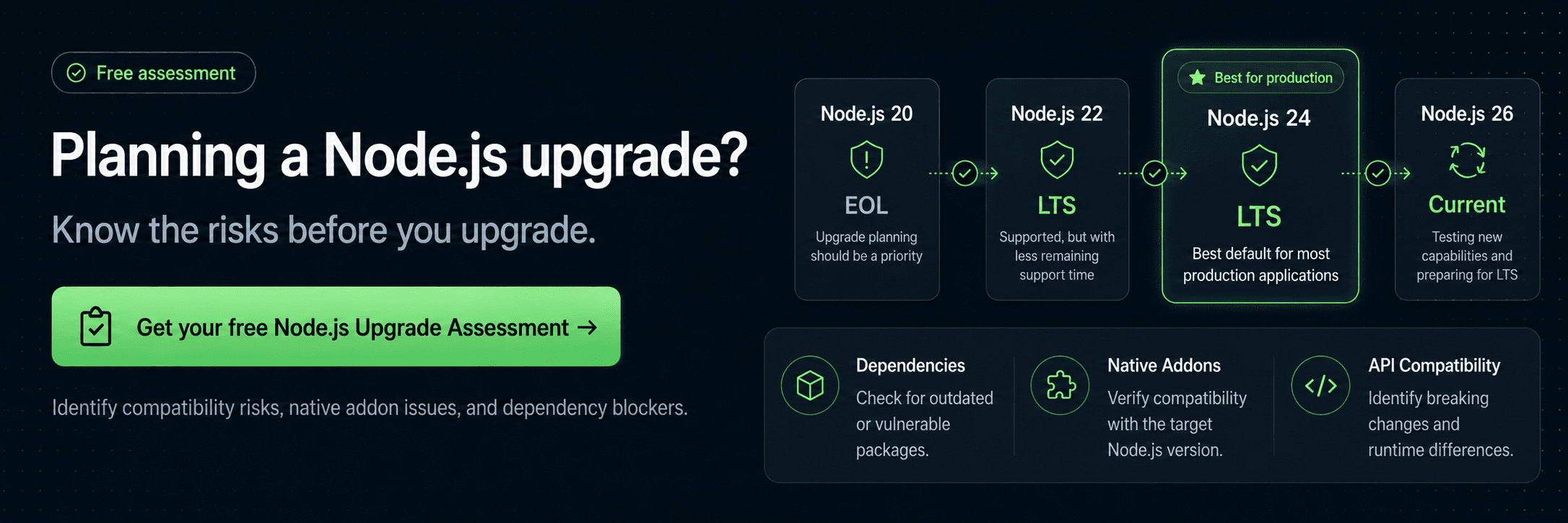
If your application does not heavily rely on the crypto module, module hooks, or performance profiling, you may choose to delay upgrading to Node.js 26.7.0. However, staying up-to-date with the latest version is generally recommended to benefit from security patches and performance improvements.
For developers and technical founders interested in building robust applications, it's crucial to stay informed about the latest updates in the Node.js ecosystem. For those working on projects similar to Good Food Pro's multi-restaurant food delivery marketplace, leveraging the latest Node.js features can enhance scalability and security. To explore how these updates can be integrated into your projects, visit our documentation and features pages for more insights.